NCERT Economics Book for Class 11 (Old NCERT)
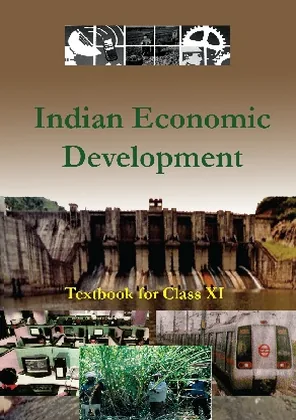
Textbook: Indian Economic Development · Statistics for Economics
The old edition of the NCERT Economics textbooks for Class 11 (Indian Economic Development · Statistics for Economics), following the chapter list of the current NCERT reprint. All 16 chapters are listed below, each with its chapter PDF and solution PDF, followed by the complete book PDF.
- 16Chapters
- 2Books
- OldNCERT edition
Chapters
Chapter-wise list of this textbook. Each chapter page has its chapter PDF and solution PDF.
Book 1: Indian Economic Development
- Ch. 1Indian Economy on the Eve of Independence
- Ch. 2Indian Economy 1950–1990
- Ch. 3Liberalisation, Privatisation and Globalisation: An Appraisal
- Ch. 4Human Capital Formation in India
- Ch. 5Rural Development
- Ch. 6Employment: Growth, Informalisation and Other Issues
- Ch. 7Environment and Sustainable Development
- Ch. 8Comparative Development Experiences of India and its Neighbours
Book 2: Statistics for Economics
Complete book PDF
The complete Old NCERT Economics book for Class 11, in two editions. Each link opens a Google Drive folder with the complete book PDFs.
- Old (Rationalised) Coming soon
- Old (Not Rationalised) Coming soon
About NCERT Economics for Class 11 (Old NCERT)
What Economics covers
NCERT Economics covers Indian economic development, statistics for economics, and introductory micro- and macroeconomics — demand and supply, markets, national income, money, banking and government budgets.
Why Class 11 matters
Class 11 begins the senior secondary stage, where students choose Science, Commerce or Humanities and study each subject in depth; it is also the foundation for entrance exams such as JEE, NEET and CUET.
What's in this book (16 chapters)
Every chapter page has a short overview, the topics covered, and the chapter PDF and solution PDF side by side. The first chapters are:
- Ch 1 (Indian Economic Development). Indian Economy on the Eve of Independence
- Ch 2 (Indian Economic Development). Indian Economy 1950–1990
- Ch 3 (Indian Economic Development). Liberalisation, Privatisation and Globalisation: An Appraisal
- Ch 4 (Indian Economic Development). Human Capital Formation in India
- Ch 5 (Indian Economic Development). Rural Development
- Ch 6 (Indian Economic Development). Employment: Growth, Informalisation and Other Issues
How to study Economics
Learn definitions and diagrams carefully, practise numerical problems in statistics and macroeconomics, and relate theory to Indian examples.
How to study Class 11 Economics
1Two books, two skills
Indian Economic Development traces India's economy since independence; Statistics for Economics teaches how economists collect and analyse data.
- For Indian Economic Development, make a timeline of policies and reforms.
- Follow current economic news to connect chapters with real events.
- For Statistics, practise every numerical — central tendency, correlation and index numbers.
- Draw neat, labelled graphs and tables.
How to study NCERT Economics
1Graphs, definitions and real examples
Economics in Class 11 and 12 combines theory, graphs and the Indian economy. Microeconomics and macroeconomics depend heavily on diagrams — demand and supply curves, cost curves, market equilibrium, the circular flow of income.
- Practise drawing them accurately with labelled axes and curves, and make sure you can explain in words what each shift or movement means.
- Statistics for Economics in Class 11 is numerical and rewards regular practice like mathematics.
- Indian Economic Development connects the theory to what has actually happened in India since independence — planning, reforms, agriculture, employment, sustainable development — so following current economic news helps here.
2Study tips
- Learn definitions precisely; many short questions ask for them directly.
- For every diagram, write a two-line explanation underneath it in your notes.
- Solve numerical questions on national income and elasticity regularly.
- Use examples from India in long answers wherever possible.
Frequently asked questions
How many chapters are there in Class 11 Economics (Old NCERT)?
NCERT Archive lists 16 chapters for the Old NCERT Economics book for Class 11 (Indian Economic Development · Statistics for Economics).
Where can I download the Class 11 Economics Old NCERT PDF?
Each chapter page has a Download Chapter PDF button, and the complete book PDF is listed on this page.
Are solutions available for Class 11 Economics (Old NCERT)?
Yes — for the old edition, every chapter page has a Download Solution PDF button right next to the chapter PDF.
Related resources
More about this book
About this textbook
The NCERT Economics textbook for Class 11 is published here in its old ncert edition, as part of the senior secondary stage of the NCERT curriculum, where students specialise in a Science, Commerce or Humanities stream and study each subject in significant depth.
- NCERT — the National Council of Educational Research and Training — writes and publishes this textbook as the standard reference for Economics in CBSE and CBSE-affiliated schools across India, and it's what most school-level exams and homework for Class 11 are set against.
How this page is organised
The old NCERT Economics book for Class 11 is listed chapter by chapter, and every chapter page has both the chapter PDF and a Download Solution PDF button side by side.
- The complete book is also linked on this page in two editions, Old (Rationalised) and Old (Not Rationalised), each as a Google Drive folder of PDFs; a link shows "Coming soon" until it is added.
New and old NCERT editions
Because NCERT periodically revises its textbooks, both a "New NCERT" and an "Old NCERT" edition can be in use at the same time in different schools.
- NCERT Archive keeps the two fully separate — this page covers only the old ncert edition of Economics for Class 11.
- If you're looking for the new edition instead, it's linked from this page (where published) so you don't end up mixing chapters, exercise numbers or solutions between the two.
How to study with this book
Reading the chapter first and attempting its exercises independently, before checking the matching NCERT Solution, tends to build a stronger and more exam-ready understanding of Economics than starting with the answers.
- Where NCERT has published an official PDF for this book, it's linked directly and marked "Official NCERT Source" so there's never any doubt about where it came from.