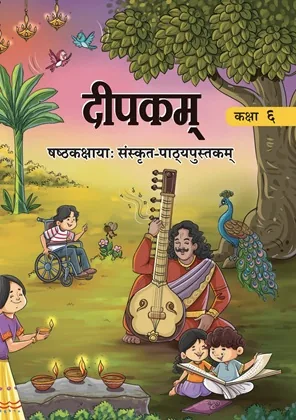
Class 6 · Sanskrit · New NCERT
Chapter 15: माधवस्य प्रियम् अङ्गम्
In this chapter
"माधवस्य प्रियम् अङ्गम्" (Madhavasya Priyam Angam, "Madhava's favourite part of the body") is a lesson of about eight pages whose title suggests a playful text about body parts and a boy called Madhava. Students are likely to learn the names of parts of the body and sentences about what each does, with possessive forms such as "Madhava's". It links with the Science book's chapters on the body and health, and benefits from pointing, drawing and games like naming parts in Sanskrit.
- Chapter
- 15 of 16
- Textbook
- Deepakam
- Class
- Class 6 · Sanskrit
- Edition
- New NCERT
- Topics
- 4
Topics covered
- शरीर के अंग
- अंगों के नाम
- वाक्य रचना
- पठन
How to study this chapter
Sanskrit is best learnt first by ear and voice.
- For "माधवस्य प्रियम् अङ्गम्", students should listen to the teacher, repeat clearly and chant before reading, then read the words and sentences, copy them in the script and answer simple questions orally.
- Accurate pronunciation of each sound matters.
- Repetition, rhythm, games and short dialogues keep the lessons lively, and the vocabulary is built up gradually from everyday words.
- A good follow-up to "माधवस्य प्रियम् अङ्गम्" is to make word cards for new words and play a quick matching or speaking game at home.
- Where a verse or saying is part of the lesson, learn it together and talk about what it means in everyday life.
Where this chapter fits
This is chapter 15 of 16 in Deepakam, the Class 6 Sanskrit textbook, and begins on page 152 of the printed 2026-27 book.
- It follows "आलस्यं हि मनुष्याणां शरीरस्थः महान् रिपुः" and is followed by "वृक्षाः सत्पुरुषाः इव".
- In English the title reads roughly: Madhava's favourite part of the body.
Using this page
This overview is written from the 2026-27 textbook's Contents page, its preface and the chapter title, to help families and teachers prepare.
- Please read the chapter itself for exact content, activities and exercises.
- On this page you can download the Chapter 15 PDF and open the Chapter Solution page, which has the NCERT Archive solution PDF for this chapter.
- The "Topics covered" list on this page gives a quick checklist for revision: tick each one off once you can explain it in your own words, then attempt the chapter's questions before checking the solution.
- This chapter is part of Deepakam, the New NCERT Sanskrit textbook for Class 6.