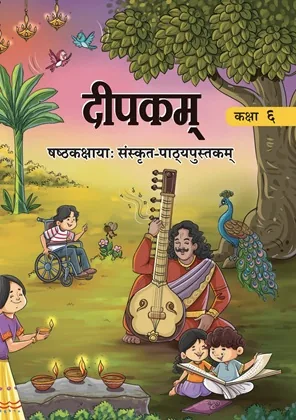
Class 6 · Sanskrit · New NCERT
Chapter 2: संयुक्त-व्यञ्जनानि
In this chapter
"संयुक्त-व्यञ्जनानि" (Samyukta-Vyanjanani, "conjunct consonants") is a short lesson of about six pages that follows the alphabet. Conjunct consonants are two or more consonants joined into one written form, and they are among the trickiest parts of reading Devanagari.
- Chapter
- 2 of 16
- Textbook
- Deepakam
- Class
- Class 6 · Sanskrit
- Edition
- New NCERT
- Topics
- 4
Topics covered
- संयुक्त व्यंजन
- संयुक्ताक्षरों का पठन
- लेखन अभ्यास
- शब्द पहचान
About this chapter
- Students are likely to learn common conjuncts, read words that contain them and practise writing them.
- The lesson builds reading fluency and accuracy, and benefits from regular, short practice with word cards and chanting.
What this chapter teaches
The aim with "संयुक्त-व्यञ्जनानि" is to enjoy Sanskrit and begin to use it, not to memorise grammar rules.
- Short daily practice is more effective than long occasional sessions.
- Reciting verses with correct rhythm, learning a few new words each day and using them in simple spoken sentences develop fluency, while the script is practised through neat, careful copying.
How to study this chapter
Families do not need to know Sanskrit to help with "संयुक्त-व्यञ्जनानि".
- Ask your child to chant or read the lesson aloud, to teach you a few words and to say a sentence from it each day.
- Listening with interest and praising clear pronunciation is enough.
Where this chapter fits
This is chapter 2 of 16 in Deepakam, the Class 6 Sanskrit textbook, and begins on page 25 of the printed 2026-27 book.
- It follows "वयं वर्णमालां पठामः" and is followed by "एषः कः ?
- एषा का ?
- एतत् किम् ?".
- In English the title reads roughly: Conjunct consonants.
Using this page
This overview is written from the 2026-27 textbook's Contents page, its preface and the chapter title, to help families and teachers prepare.
- Please read the chapter itself for exact content, activities and exercises.
- On this page you can download the Chapter 2 PDF and open the Chapter Solution page, which has the NCERT Archive solution PDF for this chapter.
- The "Topics covered" list on this page gives a quick checklist for revision: tick each one off once you can explain it in your own words, then attempt the chapter's questions before checking the solution.
- This chapter is part of Deepakam, the New NCERT Sanskrit textbook for Class 6.