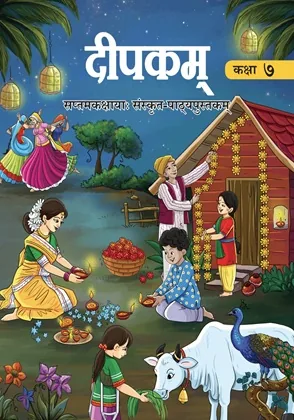
Class 7 · Sanskrit · New NCERT
Chapter 4: न लभ्यते चेत् आम्लं द्राक्षाफलम्
In this chapter
"न लभ्यते चेत् आम्लं द्राक्षाफलम्" (Na Labhyate Chet Amlam Drakshaphalam, "if it cannot be had, the grape is sour") echoes the well-known fable of the fox and the sour grapes, in a lesson of about eight pages. Students read the story in simple Sanskrit, follow the plot and discuss how people sometimes pretend that what they cannot get is not worth having. It supports comprehension of a connected narrative and values, and links with fables in the English and Hindi books.
- Chapter
- 4 of 12
- Textbook
- Deepakam
- Class
- Class 7 · Sanskrit
- Edition
- New NCERT
- Topics
- 4
Topics covered
- लोमड़ी और खट्टे अंगूर
- कथा
- संस्कृत पठन
- नीति
What this chapter teaches
In "न लभ्यते चेत् आम्लं द्राक्षाफलम्", students move from sounds and words to simple sentences and, in later lessons, to well-known verses and short texts.
- Matching pictures with words, filling blanks, forming sentences from word cards and speaking in pairs are useful activities.
- The teacher can connect new Sanskrit words with Hindi and other Indian languages, since many are shared, which helps students guess meanings and builds confidence.
How to study this chapter
After the lesson on "न लभ्यते चेत् आम्लं द्राक्षाफलम्", ask your child to say or write two or three new Sanskrit words and what they mean.
- Looking for similar words in Hindi or the home language is a useful game.
Where this chapter fits
This is chapter 4 of 12 in Deepakam, the Class 7 Sanskrit textbook, and begins on page 39 of the printed 2026-27 book.
- It follows "मित्राय नमः" and is followed by "सेवा हि परमो धर्मः".
- In English the title reads roughly: If it cannot be had, the grape is sour.
Using this page
This overview is written from the 2026-27 textbook's Contents page, its preface and the chapter title, to help families and teachers prepare.
- Please read the chapter itself for exact content, activities and exercises.
- On this page you can download the Chapter 4 PDF and open the Chapter Solution page, which has the NCERT Archive solution PDF for this chapter.
- The "Topics covered" list on this page gives a quick checklist for revision: tick each one off once you can explain it in your own words, then attempt the chapter's questions before checking the solution.
- This chapter is part of Deepakam, the New NCERT Sanskrit textbook for Class 7.