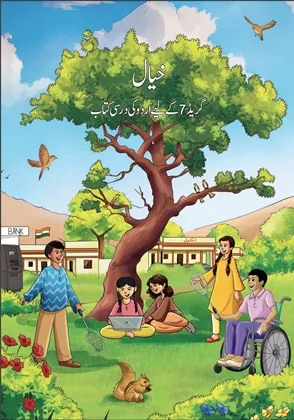
Class 7 · Urdu · New NCERT
Chapter 6: بوڑھی اماں کی بات
In this chapter
"Boodhi Amma ki Baat" (بوڑھی اماں کی بات) is a folk tale whose title means "the old woman's word". Folk tales pass on wisdom through memorable characters, and an elderly woman's advice often turns out to be right.
- Chapter
- 6 of 14
- Textbook
- Khayal
- Class
- Class 7 · Urdu
- Edition
- New NCERT
- Topics
- 4
Topics covered
- Folk tale
- Old woman's wisdom
- Advice
- Story
About this chapter
- At about ten pages it is a long chapter, with room for plot and moral.
- Students read the tale, retell it and discuss why elders' experience matters.
- It supports comprehension, oral skills and appreciation of oral tradition, and links with the folk tales in the Hindi and English books.
How to study this chapter
Urdu is written right to left in a cursive script, so reading and writing need regular, patient practice.
- With "بوڑھی اماں کی بات", teachers are advised to read the lesson aloud first, let children repeat with correct pronunciation, discuss the meaning of new words and then move to oral and written questions.
- Writing practice builds from letters to words to sentences.
- Poems are best learnt with rhythm and recited aloud, and children should be encouraged to love the sound of the language as much as its script.
- After "بوڑھی اماں کی بات", ask your child to tell you the story or the idea in their own words, and to write one or two neat sentences in Urdu script.
- Elders can add poems, sayings and stories from their own childhood, which strengthens the connection with the language.
Where this chapter fits
This is chapter 6 of 14 in Khayal, the Class 7 Urdu textbook, and begins on page 47 of the printed 2026-27 book.
- It follows "جگنو" and is followed by "بریگیڈیر محمد عثمان".
- Its form in the contents is: folk tale.
- Transliterated title: Boodhi Amma ki Baat.
Using this page
This overview is written from the 2026-27 textbook's Contents page, its preface and the chapter title, to help families and teachers prepare.
- Please read the chapter itself for exact content, activities and exercises.
- On this page you can download the Chapter 6 PDF and open the Chapter Solution page, which has the NCERT Archive solution PDF for this chapter.
- The "Topics covered" list on this page gives a quick checklist for revision: tick each one off once you can explain it in your own words, then attempt the chapter's questions before checking the solution.
- This chapter is part of Khayal, the New NCERT Urdu textbook for Class 7.