Class 9 · Arts · New NCERT
Chapter 3: Symbols and Metaphors on Stage
In this chapter
"Symbols and Metaphors on Stage" is a Theatre chapter. Students are likely to explore how theatre uses objects, actions, colours and gestures as symbols and metaphors to convey meaning beyond the literal, and how a simple object can stand for an idea.
- Chapter
- 3 of 17
- Textbook
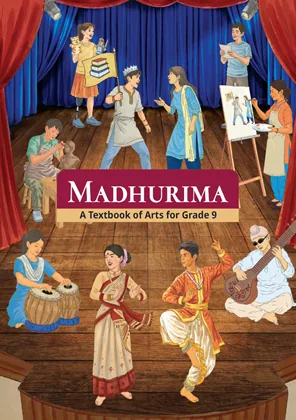
- Madhurima
- Class
- Class 9 · Arts
- Edition
- New NCERT
- Topics
- 4
Topics covered
- Symbols and metaphors
- Meaning in theatre
- Objects and gestures
- Devising scenes
About this chapter
- They may devise short scenes that use symbolism.
- The chapter builds the analytical and descriptive capabilities the preface describes and helps students read performances with greater depth.
- It links with the study of metaphor in the English and Hindi poems.
How to study this chapter
After "Symbols and Metaphors on Stage", ask your child to show or teach you something they learnt: a song, a movement, a drawing or a short scene.
- Watching, listening and appreciating at home encourages the habit of creative practice.
Where this chapter fits
This is chapter 3 of 17 in Madhurima, the Class 9 Arts textbook, in the Theatre section, and begins on page 51 of the printed 2026-27 book.
- It follows "The Stage Is Yours" and is followed by "Creativity in Light and Sound".
More about this chapter
The process matters more than the product in "Symbols and Metaphors on Stage".
- Students are encouraged to experiment, observe, analyse and express in their own way, building analytical, descriptive and narrative capabilities rooted in aesthetics.
- The book's thread of Bharat Bodh, awareness of India, links each art form to the country's many traditions, and teamwork and inclusivity are valued.
- Activities can be done with simple, locally available materials.
Using this page
This overview is written from the 2026-27 textbook's Contents page, its preface and the chapter title, to help families and teachers prepare.
- Please read the chapter itself for exact content, activities and exercises.
- On this page you can download the Chapter 3 PDF and open the Chapter Solution page, which has the NCERT Archive solution PDF for this chapter.
- The "Topics covered" list on this page gives a quick checklist for revision: tick each one off once you can explain it in your own words, then attempt the chapter's questions before checking the solution.
- This chapter is part of Madhurima, the New NCERT Arts textbook for Class 9.