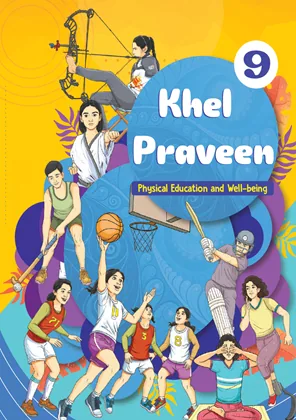
Class 9 · Physical Education and Well Being · New NCERT
Chapter 4: Sports for All
In this chapter
Unit 4, "Sports for All", of Khel Praveen — the Class 9 Physical Education and Well-being textbook — contains 6 chapters: Chapter 12, "Sports and Inclusivity"; Chapter 13, "Sports and Disability"; Chapter 14, "Disability Etiquettes: Respecting Everyone with Dignity"; Chapter 15, "Young Athlete"; Chapter 16, "Women in Sports"; Chapter 17, "Age is Just a Number". This page covers the whole unit and links to its PDF.
- Chapter
- 4 of 6
- Textbook
- Khel Praveen
- Class
- Class 9 · Physical Education and Well Being
- Edition
- New NCERT
- Topics
- 8
Topics covered
- Inclusive sport
- Adapting games
- Paralympic sports
- Adapted sports
- Disability etiquette
- Respectful language
- Young athletes
- Training and rest
More about this chapter
"Sports and Inclusivity" opens the unit Sports for All, at about eight pages.
- Students are likely to explore what it means for sport to be open to everyone, regardless of gender, ability, background or place, and how games can be adapted so all can take part.
- It links with the inclusive approach of the whole series.
- Discussion, examples from schools and communities and a task to adapt a game inclusively make the idea practical.
- "Sports and Disability" is a chapter of about eight pages.
- Students are likely to learn about Paralympic and other adapted sports, athletes with disabilities and the ways sport is made accessible.
- It links with the English chapter on the Paralympic athlete Deepa Malik and with the Class 7 English chapter on mountaineering.
- Respect, understanding of barriers and the achievements of athletes are central, and students can try adapted games such as sitting volleyball.
- "Disability Etiquettes: Respecting Everyone with Dignity" is a short chapter of about five pages.
- Students are likely to learn respectful language and behaviour towards people with disabilities, such as asking before helping, speaking directly to the person and avoiding assumptions.
- It continues the previous chapter's focus on inclusion.
- Role-play of everyday situations and discussion of respectful phrases build empathy and practical habits that apply well beyond sport.
- "Young Athlete" is a short chapter of about five pages.
- Students are likely to learn about the needs of young athletes: training, rest, nutrition, injury prevention and the balance between study and sport, and perhaps the pressures on children in competitive sport.
- It links with the earlier chapters on fitness, growth and first aid.
- Setting realistic goals and understanding that early success is not everything are likely messages.
- "Women in Sports" is a chapter of about eight pages.
- Students are likely to learn about the achievements of women athletes, the barriers they have faced and the progress made, with Indian examples.
- It links with the Class 7 English chapter on Arunima Sinha and the Class 6 Urdu essay on Mary Kom and with themes of equality.
- Discussion of stereotypes and a project on a woman athlete make it engaging, and it encourages girls and boys alike to see sport as open to all.
- "Age is Just a Number" closes the unit Sports for All, at about nine pages.
- Students are likely to learn that people can take up sport and fitness at any age and that older athletes can excel, and to read about masters athletes and inspiring examples.
- It links with the English chapter on a grandmother learning to read and with the theme of lifelong fitness.
- Interviewing an older relative about their activity and play makes it personal.
Using this page
On this page you can download the Unit 4 PDF and open its solution page.
- Khel Praveen has six units — Evolution of Physical Education and Well-being, Science and Sports, Olympism, Sports for All, Sports, and Yoga for Holistic Health and Personal Excellence — and is assessed through theory, practical work and a project, so pair reading with regular practice.