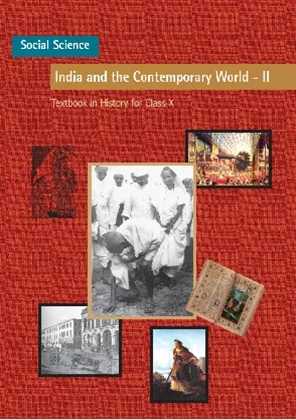
Class 10 · Social Science · Old NCERT
India and the Contemporary World – II (History) · Contemporary India – II (Geography) · Democratic Politics – II (Political Science) · Understanding Economic Development (Economics) · India and the Contemporary World – II (History)
Chapter 3 (India and the Contemporary World – II (History)): The Making of a Global World
In this chapter
"The Making of a Global World" covers pre-modern trade, the 19th-century world economy, the Great Depression and post-war economy.
- Chapter
- 3 of 22
- Textbook
- India and the Contemporary World – II (History) · Contemporary India – II (Geography) · Democratic Politics – II (Political Science) · Understanding Economic Development (Economics) · India and the Contemporary World – II (History)
- Class
- Class 10 · Social Science
- Edition
- Old NCERT
- Topics
- 4
Topics covered
- Global trade
- Colonialism
- Great Depression
- Bretton Woods
How to study this chapter
For "The Making of a Global World", prepare a summary of the main points under headings, learn definitions precisely, and practise map work or source-based questions where the chapter includes them.
- Answer the exercise questions yourself before checking the solution.
Exam focus
Class 10 board questions on "The Making of a Global World" range from one-mark facts to longer explanatory and source- or case-based questions.
- Revise key terms, dates and examples from the NCERT text, practise writing answers in clear points, and where the chapter has maps or data, practise those too — they are reliable marks.
Where this chapter fits
This is Chapter 3 of 5 in India and the Contemporary World – II (History), one of the old-edition NCERT Social Science books for Class 10.
- It comes after Chapter 2, "Nationalism in India", and is followed by Chapter 4, "The Age of Industrialisation".
Using this page
Use the buttons on this page to download the Chapter 3 PDF and the NCERT Archive solution PDF for "The Making of a Global World" side by side.
- The complete Social Science book PDF for Class 10 is available on the book page.
Looking for the whole textbook? Open the complete book PDF.