NCERT The World Around Us Book for Class 3 (New NCERT)
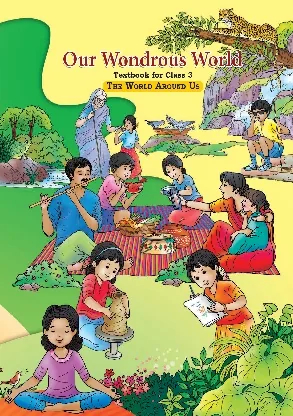
Textbook: Our Wondrous World
The NCERT The World Around Us textbook (Our Wondrous World) for Class 3. All 12 chapters of the 2026-27 edition are listed below; full content, topic notes and downloadable PDFs are being added — check back soon.
- 12Chapters
- 23Languages
- NewNCERT edition
Available in 23 languages. English is the default — every chapter page has a download button for each language.
- English
- हिन्दीHindi
- اردوUrdu
- অসমীয়াAssamese
- বাংলাBengali
- बड़ोBodo
- डोगरीDogri
- ગુજરાતીGujarati
- ಕನ್ನಡKannada
- كٲشُرKashmiri
- कोंकणीKonkani
- मैथिलीMaithili
- മലയാളംMalayalam
- মণিপুরীManipuri
- मराठीMarathi
- नेपालीNepali
- ଓଡ଼ିଆOdia
- ਪੰਜਾਬੀPunjabi
- संस्कृतम्Sanskrit
- ᱥᱟᱱᱛᱟᱲᱤSanthali
- سنڌيSindhi
- தமிழ்Tamil
- తెలుగుTelugu
Our Wondrous World is the NCERT textbook for The World Around Us at Class 3. The National Curriculum Framework for School Education 2023 treats this area as integrated and interdisciplinary, combining science, social science and environmental education, and the prelims say the book is meant to evoke curiosity through hands-on activities and open-ended questions rather than rote memorisation. Concepts move from known to unknown, local to global, simple to complex and concrete to abstract.
More about this book
The twelve chapters are grouped into four units.
- Our Families and Communities includes "Family and Friends", "Going to the Mela" and "Celebrating Festivals".
- Life Around Us includes "Getting to Know Plants", "Plants and Animals Live Together" and "Living in Harmony".
- Gifts of Nature brings together "Water - A Precious Gift", "Food We Eat" and "Staying Healthy and Happy".
- Things Around Us closes the book with "This World of Things", "Making Things" and "Taking Charge of Waste".
- Each unit opens with a concept scheme that links chapters to competencies and learning outcomes.
- Chapters use an interactive dialogue or a story-cum-narrative approach, for example children exploring a garden and discovering plant parts.
- The book also includes gentle new vocabulary such as transparent, opaque and translucent, explained through pictures.
- Every chapter carries a built-in assessment idea, such as drawing a route from home to school, making a rangoli from natural materials, matching traffic signs, labelling pictures, or observing plant growth, and a Let us reflect section helps children summarise what they learnt.
- The prelims give "Food We Eat" as an example of integration: a regional dish like haakh from Srinagar opens up questions about ingredients, places and culture.
- At home, take walks, look at plants and animals nearby, and ask open questions.
- The chapter list follows the Contents page of the 2026-27 reprint.
Chapters
- Ch. 1Family and Friends
- Ch. 2Going to the Mela
- Ch. 3Celebrating Festivals
- Ch. 4Getting to Know Plants
- Ch. 5Plants and Animals Live Together
- Ch. 6Living in Harmony
- Ch. 7Water – A Precious Gift
- Ch. 8Food We Eat
- Ch. 9Staying Healthy and Happy
- Ch. 10This World of Things
- Ch. 11Making Things
- Ch. 12Taking Charge of Waste
About NCERT The World Around Us for Class 3 (New NCERT)
What The World Around Us covers
The World Around Us is NCERT's new environmental studies course for the primary classes, built around exploration of family, nature, community and the local environment.
Why Class 3 matters
Class 3 introduces Environmental Studies alongside languages and Mathematics, and children begin reading independently and working with three-digit numbers.
What's in this book (12 chapters)
Every chapter page has an overview, the chapter PDF and, where published, a step-by-step NCERT Solution. The first chapters are:
- Ch 1. Family and Friends
- Ch 2. Going to the Mela
- Ch 3. Celebrating Festivals
- Ch 4. Getting to Know Plants
- Ch 5. Plants and Animals Live Together
- Ch 6. Living in Harmony
How to study The World Around Us
Learn through activities, observation and discussion; connect each lesson to the child's own surroundings.
How to learn with The World Around Us
1Learning starts outside the book
Our Wondrous World, the Class 3 to 5 textbook for The World Around Us, is about the child's own surroundings — family, food, water, plants, animals, travel, the neighbourhood and the natural world. The best way to study it is to step outside the book.
- When a chapter talks about trees, go and look at trees nearby and notice their leaves and bark.
- When it talks about food, look at what is cooked at home and where the ingredients come from.
- Encourage children to talk about what they see, draw it and ask questions.
- The book's activities and discussion prompts are not extras — they are the heart of the subject.
- There are very few facts to memorise at this stage; what matters is observing carefully, describing clearly and being curious.
2Simple ways parents can help
- Ask your child to explain one thing from the chapter in their own words at dinner.
- Do one small activity from the book each week, even if it takes only ten minutes.
- Keep a scrapbook of drawings, leaves, pictures and notes from each chapter.
- If your home language is not English, read the chapter in that language too — the book is published in many Indian languages.
Frequently asked questions
How many chapters are there in Class 3 The World Around Us (New NCERT)?
NCERT Archive lists 12 chapters for the New NCERT The World Around Us book for Class 3 (Our Wondrous World).
Where can I download the Class 3 The World Around Us New NCERT PDF?
Each chapter page has a Download Chapter PDF button, and the official NCERT site is linked from this page.
Are solutions available for Class 3 The World Around Us (New NCERT)?
Yes — chapters with a published solution link to a step-by-step NCERT Solution page, and a solution PDF where one is available.
Related resources
More about this book
About this textbook
The NCERT The World Around Us textbook for Class 3 is published here in its new ncert edition, as part of the primary stage of the NCERT curriculum, where the focus is on building strong reading, number and observation skills through simple language and activity-based exercises.
- NCERT — the National Council of Educational Research and Training — writes and publishes this textbook as the standard reference for The World Around Us in CBSE and CBSE-affiliated schools across India, and it's what most school-level exams and homework for Class 3 are set against.
How this page is organised
This page is organised chapter by chapter, matching the structure of the printed textbook exactly, so a chapter number here always lines up with the same chapter number in the physical or PDF book.
- Each chapter links through to its full text and, where available, a step-by-step NCERT Solution written against the exercises in this specific edition.
New and old NCERT editions
Because NCERT periodically revises its textbooks, both a "New NCERT" and an "Old NCERT" edition can be in use at the same time in different schools.
- NCERT Archive keeps the two fully separate — this page covers only the new ncert edition of The World Around Us for Class 3.
- If you're looking for the old edition instead, it's linked from this page (where published) so you don't end up mixing chapters, exercise numbers or solutions between the two.
How to study with this book
Reading the chapter first and attempting its exercises independently, before checking the matching NCERT Solution, tends to build a stronger and more exam-ready understanding of The World Around Us than starting with the answers.
- Where NCERT has published an official PDF for this book, it's linked directly and marked "Official NCERT Source" so there's never any doubt about where it came from.